PonMegane

VITO PARIS - Vintage Parisian Eyewear

  • Period: Late 1950s–1970s
  • Origin: Paris, France
  • Designer: Victor Bitchatchi
  • Stocked at: PonMegane Omiya
  • → 日本語ページへ
VITO PARIS

About VITO PARIS

VITO PARIS is the personal label of founder and designer Victor Bitchatchi, who created small-batch, highly individual eyewear in Paris from the late 1950s through the 1970s. Very few documents from that period have survived, so the full picture of his work remains elusive. However, the rare original pieces that still circulate among collectors – together with accounts from people who knew him – suggest that Bitchatchi was one of the most important, if largely undocumented, figures in the French eyewear scene of his time.

Working under several labels – including VITO PARIS, VITO DE PARIS,ATELIER DE PARIS and NEWEYE (VITO DESIGN) – he released a limited number of highly individual frames. Even before launching his own brand, he was invited to advise a very young Alain Mikli on design. In a later interview, Mikli famously said: “I owe him everything. Without Vito, Mikli would not be who Mikli is today.” That sentence alone hints at the depth of his influence.

How PonMegane curates VITO PARIS

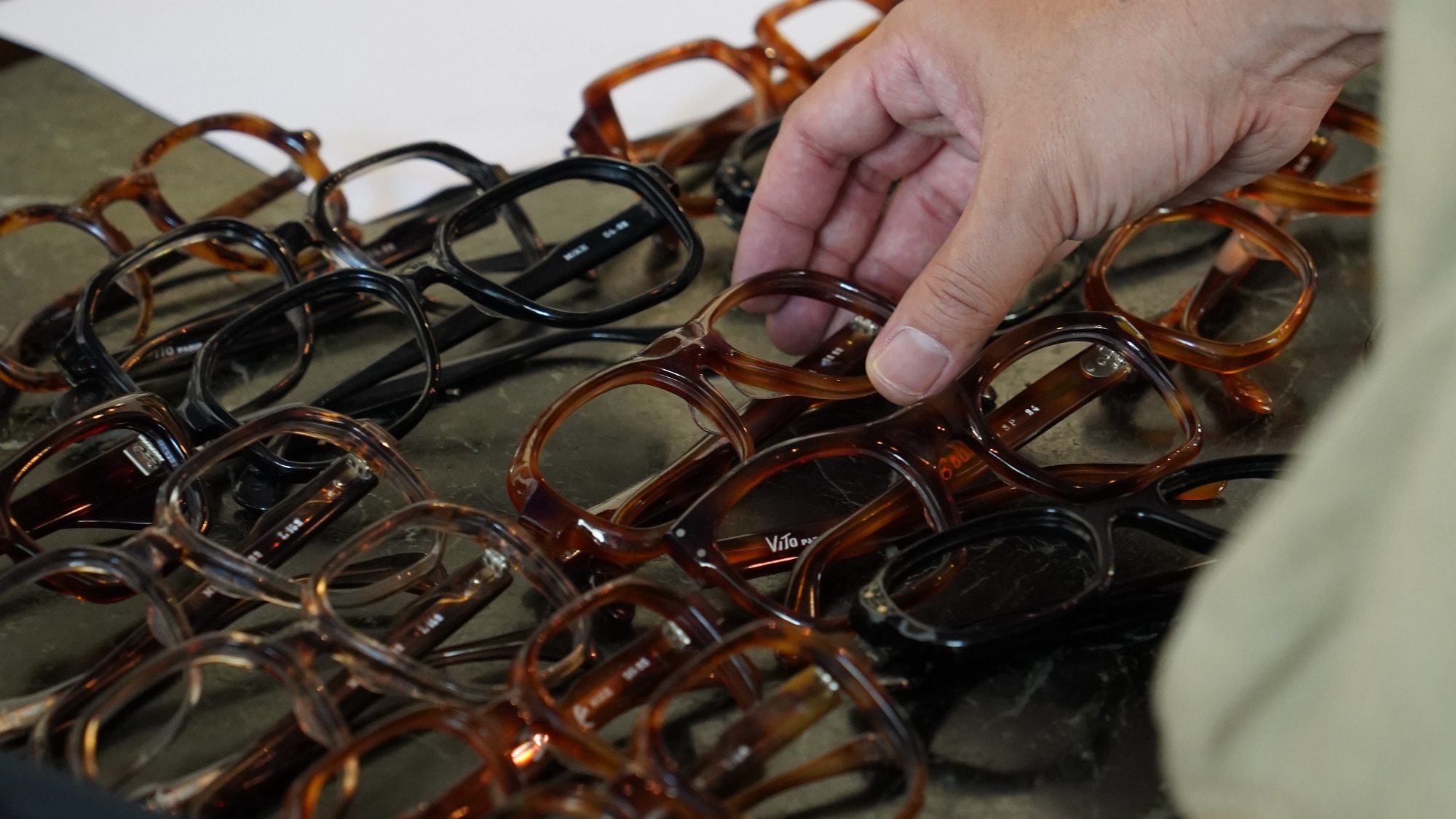
At PonMegane, we approach VITO PARIS not as museum pieces but as eyewear to be worn today. As a specialist eyewear select shop, we carefully edit the collection and focus on frames that clearly express VITO’s signature three-dimensional volumes and outstanding construction. Rather than chasing only oversized or extremely organic shapes, we concentrate on designs that feel genuinely made to be lived in – pieces that translate couture-level technique and an artist’s eye into forms that quietly elevate everyday life.

Interviews with his daughter describe Bitchatchi less as a businessman and more as a painter or writer. That perspective reveals an artist with a strong fine-art background who chose eyewear as his medium. His frames read like small sculptures: independent in expression, resistant to mass production, and closer to art pieces than to conventional industrial products.

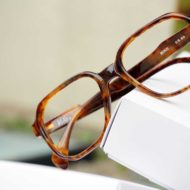
Among the many designs, we place particular emphasis on the model MIKE. Within the VITO universe it could be considered relatively understated, but in terms of size, volume, and the way curves and planes are balanced, it feels exceptionally well tuned for modern wearers. It is the kind of frame that reveals more of its nuance the longer you live with it – a quiet statement for those who appreciate true craftsmanship and authenticity.

Timeline of the Brand and Designer

Period Highlights
– Late 1940s Estimated birth year: 1928. His family was scattered during World War II and he grew up alone in France in the post-war years. He attended art schools and drawing / fine art academies in and around Montparnasse, building a strong foundation in visual arts before turning to eyewear.
1950s Opens a small store called “VITO” at 45–47 Rue d’Hauteville in the 10th arrondissement of Paris, marked by a simple blue sign with four letters: “VITO”. He became known for hand-crafting bespoke frames while calmly smoking Cuban cigars.
  • Converts the kitchen of his home on Rue Beauregard into a makeshift atelier, later moving his base to the caretaker’s lodge on Rue Mazagran.
  • Develops a unique made-to-measure method, sketching directly over photographs of the client’s face to design frames that respond to real proportions. Rather than abstract action-painting, his process is rooted in concrete observation of individual people.
Late 1960s – 1970s The brand’s peak period. VITO’s work gains attention for its organic forms, bold volumes, and distinctive colour sense, inspiring fellow opticians and designers such as Pierre Marly and Lafont.
  • Creates a stir at the SILMO trade fair, arriving in a pink Cadillac.
  • Pushes material development forward by challenging chemists at Rhône-Poulenc to improve acetate quality.
  • Rejects capital tie-ups with large chains such as Georges Lissac, prioritising creative freedom over scale.
  • Purchases an old flour mill at 29 rue Méhul in Pantin and converts it into his own factory.
  • Counts among his clientele figures such as fashion designer Yves Saint Laurent, French president Jacques Chirac, Monaco’s Prince Rainier III, musician and actor Jacques Dutronc, and singer Nana Mouskouri.
Late 1970s – Early 1980s Invited by Alain Mikli to join his new venture, becoming a crucial pillar in the early Mikli brand. Mikli later states: [I owe him everything. Without Vito, Mikli would not be who Mikli is today.] Around this period he is also believed to have visited Japan at the invitation of a Japanese company.
1990s A charity auction held in 1992 (organised by Mikli) includes a portrait of Vito wearing his own sunglasses, one of the few visual records of him from this era.
Early 2000s Briefly involved with Meyrowitz. After that, he gradually shifts his focus away from eyewear to concentrate on painting.

This timeline has been compiled from sources we consider as reliable as possible. New material may emerge in the future, and details may be updated accordingly. Vito passed away on November 30, 2016, at the age of 88. His work continues to live on through the frames he created – and in the people who choose to wear them today.

VITO PARIS Nose Pad Upgrade for Better Comfort and Fit

Unlike jewellery, fine eyewear is designed to be adjusted, refined and sometimes modified directly on the frame. At PonMegane, one of our core services as a trusted specialist optician is custom nose pad replacement, tailored to each client’s bone structure and wearing style. Many vintage European frames have comparatively wide bridges, which can compromise comfort and stability if worn as-is. For those pieces, we highly recommend considering our pad-upgrade service.

取扱店舗:ポンメガネ大宮

ポンメガネ大宮-店舗写真

ポンメガネ大宮

  • 郵便番号:330-0846
  • 住  所:埼玉県さいたま市大宮区大門町3-195 美幸ビル1F
  • 電話番号:048-782-7128
  • 営業時間:10:00〜19:00(通常営業)
  • 定休日:水曜日
  • 各種クレジットカード支払い:可能
  • paypay支払い:可能
  • 店舗にて視力測定のサービスを行なっています。
  • JR大宮駅 東口下車 徒歩9分
  • 専用駐車場のご用意がございませんので、お車でのご来店の際は近隣のコインパークをご利用くださいませ。

取扱ブランド